Moving sideways: paths to growth on the social web


Network resilience on open social networks is emergent, writes Laurens Hof. Riffing on this, and looking beyond the recent DDoS attacks, the feeling of becoming and emergence is what I love about decentralised social networks.
The wave of new users and servers on Mastodon in November 2022. The explosion of people on Bluesky in Brazil in 2024. The thrill of discovering channels on Farcaster, in the summer of that year. And the wild moment when a handful of us roamed the wider social web, advocating for Fediverse sharing on Threads, bridging on Bluesky and Mastodon, following each others accounts on Nostr and Farcaster, and federating blogs on Wordpress and Ghost. Anything seemed possible.
Bringing us to where we are today. Two communities, the ATmosphere and the Fediverse, both looking for new ways to grow. Two flagships, Bluesky and Mastodon, grappling with the same issue. Strong feelings and emotions emerged from the waves of growth that these projects enjoyed in their heyday. Those feelings are now embedded in the sub-culture of each community, keeping their advocates looking inwards, seeking to preserve what they have. Nostalgia and arcane arguments threaten to replace hope and becoming.
How to move forward? Erin Kissane and Johannes Ernst, writer and engineer, are an unlikely pair of guides, while Laurens Hof, the wordsmith, brings the power of numbers.
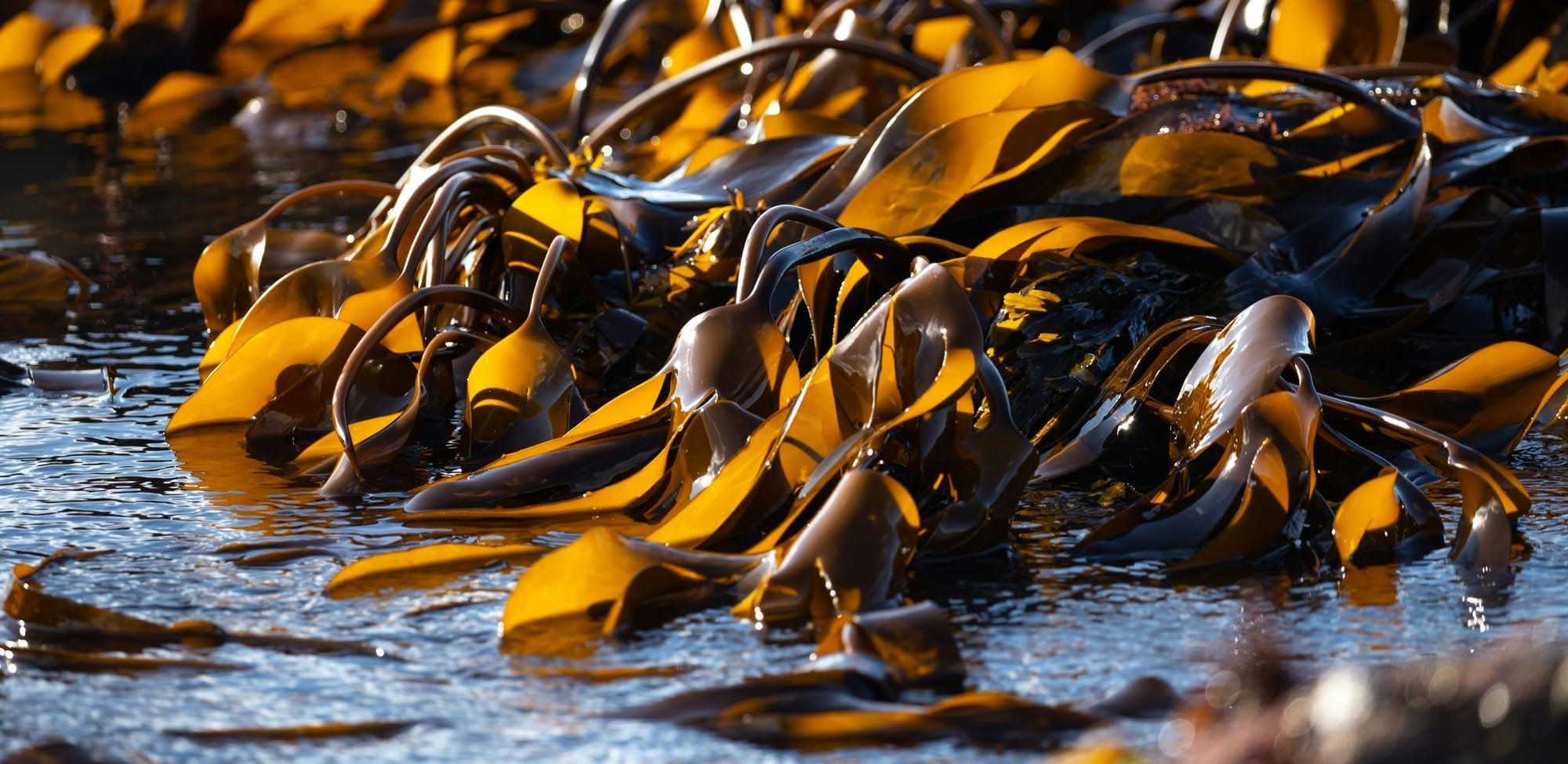
At the recent ATmosphere conference, Erin spoke powerfully of kelp and holdfasts as “sheltered spaces for community knowledge-making”.
Watching from afar, what was remarkable was that while Erin's point of reference was the ATmosphere, the holdfast stands as an equally strong metaphor for the servers of the Fediverse, when they reach their full potential. In a deeply challenging world, Fediverse communities, and those on the ATmosphere like Blacksy, Eurosky and Gander, offer safe, calm, places outside Big Tech, which more and more people crave.
Back in the summer of 2025, at FediCon in Vancouver, Johannes set out a vision for making the whole web social. The powerful point he made was that more than half of the world isn’t on Big Tech social media. Change the arena, change the battleground, and change the rules. Move away from the unequal slugfest of battling Big Tech, and escalate horizontally. Move the holdfasts to new waters.
Numbers help here. Caught up in the emotion of waves and emergence, it’s easy to ignore or deny numbers. Laurens sets out the problem for the Fediverse. Over the last three years:
“Only 3 new servers with over 1k monthly active users have appeared. There are 38 servers that are less than 3 years old and have more than 100 monthly active users, the rest of the 480 Mastodon servers with over 100 monthly active users is all older than 3 years.” (Everyone wants servers, and no-one wants servers, April 2026)
Turning the numbers on their head, and doing the work, not relying on ‘protocol eschatology’ (Laurens), the challenge is to find a path, or pathways, to create 40 servers with over 100 monthly active users, first in a year, then in a quarter, then in each month. Doubling the 480 servers with 100+ MAU in a year, and picking up some communities with over a thousand monthly active users along the way.
That’s the work we’re attempting at the Newsmast Foundation. In the ATmosphere, Blacksky is doing a variant of this work too, in its own inimitable way. First creating a fully layered tech stack and community connected to, but working outside Bluesky - with full resilience. Now offering this tech stack to new communities, through Acorn: “the substrate for a federation of new communities” (Laurens).
New holdfasts, in the form of Fediverse servers, don’t emerge from the purity of the protocol. They take work. They need building. New ATmosphere holdfasts. in the form of high impact custom feeds, portals like Eurosky, or whole communities like Blacksky, Northsky and Gander, take work too. In both cases it’s mainly the work of community building, not software development, installation or maintenance.
Paths & Patches
This blog is called “Paths & Patches”. The patches, like Erin’s holdfasts, are third spaces, at the margins, outside the dominance of Big Tech. Something which increasingly resonates with people around the world, from journalists, to scientists, to policy makers.
The paths are what we’re seeking now. Which is why Jaz-Michael King and I spent three days in the basement of the Chicago Hilton at the Online News Association conference, and the Newsmast team just spent a sunnier four days in the hilltop town of Perugia, at the International Journalism Festival. Two days after we returned, I headed up to Oxford to a Marmalade Festival event: The World Works on WhatsApp.
In research on the use of WhatsApp by women in the global south to earn a livelihood, a stark statistic was that 94% of smartphone users had WhatsApp installed.
The flipside? Only a third of the population have smartphones. Here the work is to get alternatives installed on those phones, when they are first bought, bringing users into local communities. In other parts of the world the move sideways takes on different shapes, attaching the social web to digital sovereignty, content creators or upstart newsrooms.
Laurens, Erin and Johannes set out the challenge: build new holdfasts, away from Big Tech, and address the question:
“what will be the shape of the organisations that will actually build the future of the social internet?”
There are no concrete answers. Only emerging ones.